
The atmosphere before the highly anticipated clash between England and Norway has been dramatically intensified after Norway head coach Ståle Solbakken made a controversial statement about the upcoming match. The Norwegian manager surprised international football media by confidently suggesting that Harry Kane would not be capable of leading England to victory against a side featuring Erling Haaland. His comments immediately created a storm of reactions among fans, analysts, and former players who debated whether Solbakken’s confidence was justified or crossed the line into disrespect.
The confrontation between England and Norway was already expected to attract huge attention due to the presence of two world-class strikers. Harry Kane and Erling Haaland represent two different generations of elite forwards, with both players carrying enormous expectations whenever they step onto the international stage. While Kane is known for his intelligence, passing ability, and complete attacking style, Haaland has built his reputation around explosive power, speed, and an extraordinary goalscoring instinct.
Before the match, Solbakken appeared extremely confident when discussing Norway’s chances. The Norwegian coach suggested that his team had the tools necessary to challenge England and believed that Haaland represented a decisive advantage. His comments about Kane, however, became the main talking point because many supporters interpreted them as a direct challenge to one of England’s greatest modern players.
The statement that Kane was “not good enough to beat Haaland” quickly spread across social media platforms. Some Norwegian fans praised their manager’s confidence and believed he was showing the mentality required before facing a major opponent. However, many England supporters felt the comments underestimated Kane’s influence and ignored everything the striker has achieved throughout his career.
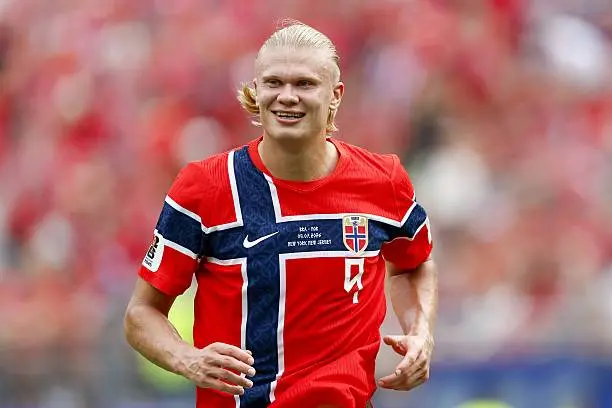
Harry Kane has spent more than a decade proving himself at the highest level. His record for club and country, his ability to score important goals, and his leadership qualities have made him one of the most respected players in world football. For many England fans, reducing his impact to a comparison with Haaland alone ignored the qualities that make him such a valuable player.
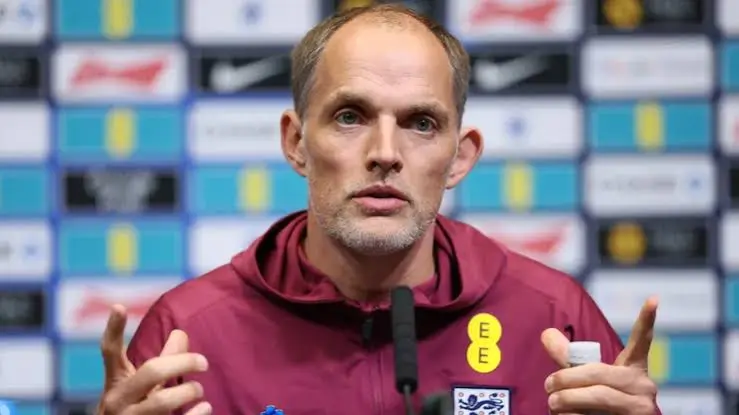
Behind the scenes, Thomas Tuchel reportedly wanted his players to avoid becoming distracted by the controversy. The England manager understood that pre-match statements are often designed to create psychological pressure. Instead of responding with anger, Tuchel focused on preparing his team and ensuring that the players remained confident in their own ability.
However, when Tuchel finally addressed the comments, his response attracted enormous attention. The England manager reportedly delivered a short but powerful message that immediately united supporters. Rather than entering into a public argument with Solbakken, Tuchel emphasized that football is decided on the pitch, not through words before the match.
Many fans praised Tuchel’s reaction because it reflected the mentality he has tried to build within the England squad. The German coach has often spoken about discipline, focus, and controlling emotions during important matches. His response suggested that he believed confidence should come from preparation and performance rather than public statements.
The psychological battle between the two teams therefore became almost as interesting as the football itself. Norway wanted to show that they were no longer a team to be underestimated, while England aimed to prove that their experience and quality remained among the best in international football. The comments from Solbakken added another layer of intensity to an already important fixture.
One of the biggest questions surrounding the match was how the two attacking stars would perform. Haaland entered the contest with the reputation of being one of the most dangerous goalscorers in modern football. His ability to find space, attack crosses, and finish chances with incredible efficiency has made him a nightmare for defenders around the world.
But Kane’s qualities are different. The England captain is not only a goalscorer but also a creator who can influence matches in multiple ways. His ability to drop deeper, connect with teammates, and control attacking moves has made him a complete forward rather than simply a striker who waits inside the penalty area.
This difference in playing styles became central to the debate after Solbakken’s comments. Some experts argued that comparing Kane and Haaland directly was unfair because they offer different strengths. While Haaland may have a physical advantage in certain situations, Kane’s overall contribution to a team remains one of the reasons why managers continue to trust him in major matches.
According to people close to the England camp, Tuchel’s message to his players was focused on unity. The manager reportedly reminded the squad that outside opinions should become motivation rather than pressure. He wanted the players to understand that criticism and bold predictions are normal parts of international football.
The reaction from England supporters showed how quickly a controversial comment can create emotional connections. Many fans who may have been nervous before the match suddenly became more united behind the team. Tuchel’s calm response contrasted strongly with Solbakken’s aggressive prediction, creating a narrative of confidence versus provocation.
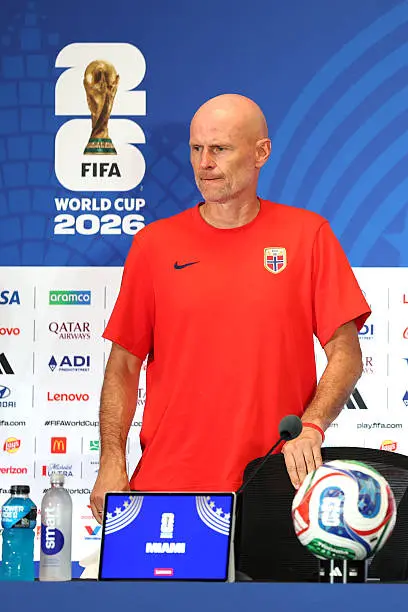
For Norway, the comments also carried risks. Confidence can inspire a team, but excessive belief before a major match can create additional pressure. If the result does not match the expectations created publicly, players and coaches often face increased criticism afterward. Solbakken’s challenge therefore placed extra attention on Norway’s performance.
The Norwegian manager, however, appeared determined to show that his team believed in its own potential. Norway has been building around a talented generation of players, led by Haaland and supported by several emerging talents. The team’s ambition is to compete more regularly against Europe’s strongest nations, and matches against England provide an opportunity to prove that progress.
For England, the match represented another test of Tuchel’s leadership. Since taking responsibility for the national team, the manager has faced expectations to deliver results while creating a strong identity. Moments of external pressure, such as Solbakken’s comments, provide opportunities to show how effectively he can manage the mentality of his squad.
The controversy also highlighted the growing importance of psychological preparation in modern football. At the highest level, teams are often separated by very small technical differences. Mental strength, confidence, and the ability to handle pressure can decide crucial moments. Tuchel’s short response appeared designed to remind his players of exactly that principle.
As anticipation continued to build, fans around the world focused on one major question: would Kane prove his critics wrong, or would Haaland demonstrate why he is considered one of football’s most unstoppable forces? The answer would not only affect the result of England vs Norway but also continue the endless debate about the qualities of two exceptional strikers.
Regardless of the final outcome, the pre-match drama created by Solbakken’s comments added another memorable chapter to the rivalry between England and Norway. The Norwegian coach wanted to send a message of belief, while Tuchel responded with a message of focus and confidence. The contrast between the two approaches captured the attention of millions of supporters.
In the end, football always provides the final answer. Statements, predictions, and psychological battles may dominate headlines before the match, but the reality is decided by performances on the field. Harry Kane, Erling Haaland, Thomas Tuchel, and Ståle Solbakken all understood that one moment of quality can change everything.
The biggest lesson from the controversy was that respect and confidence must exist together. Solbakken’s belief in Norway showed ambition, while Tuchel’s response demonstrated composure. As the teams prepared for their meeting, the world waited to see whether words would become reality or whether the players on the pitch would write a completely different story.