
England head coach Thomas Tuchel has reportedly taken a decisive step in shaping his long-term vision for the 2026 FIFA World Cup by identifying an 11-player core group he intends to build around throughout the tournament cycle. The announcement has immediately generated widespread discussion among analysts and supporters, as it signals a clear shift toward a fixed tactical foundation within the England setup.
According to Tuchel, the selected group represents what he currently considers the strongest possible combination within the England national team structure. His approach suggests a preference for stability and continuity, with the core unit expected to serve as the backbone of his tactical system. The plan is to test this configuration in the upcoming international friendly against New Zealand, providing an early indication of how the system may function under competitive conditions.
Sources close to the England camp suggest that the decision to establish a fixed core group is part of a broader strategic “hidden structure” being developed by Tuchel and his coaching staff. Rather than rotating heavily between matches, the intention is reportedly to build automatic understanding between key players, allowing the team to develop consistent patterns of play and stronger tactical chemistry over time.
The move has been interpreted by analysts as an attempt to reduce uncertainty ahead of a high-pressure World Cup campaign. By defining a stable core early, Tuchel appears to be prioritizing cohesion over experimentation. This strategy is often used in international football to ensure that key players develop synchronized movements, particularly in defensive transitions and attacking build-up phases.
A key detail emerging from the announcement is that the 11-player core is not necessarily fixed in terms of formation, but rather in terms of personnel. This means that while tactical systems may vary depending on the opponent, the same group of players is expected to form the foundation of England’s World Cup approach, providing flexibility within structural consistency.
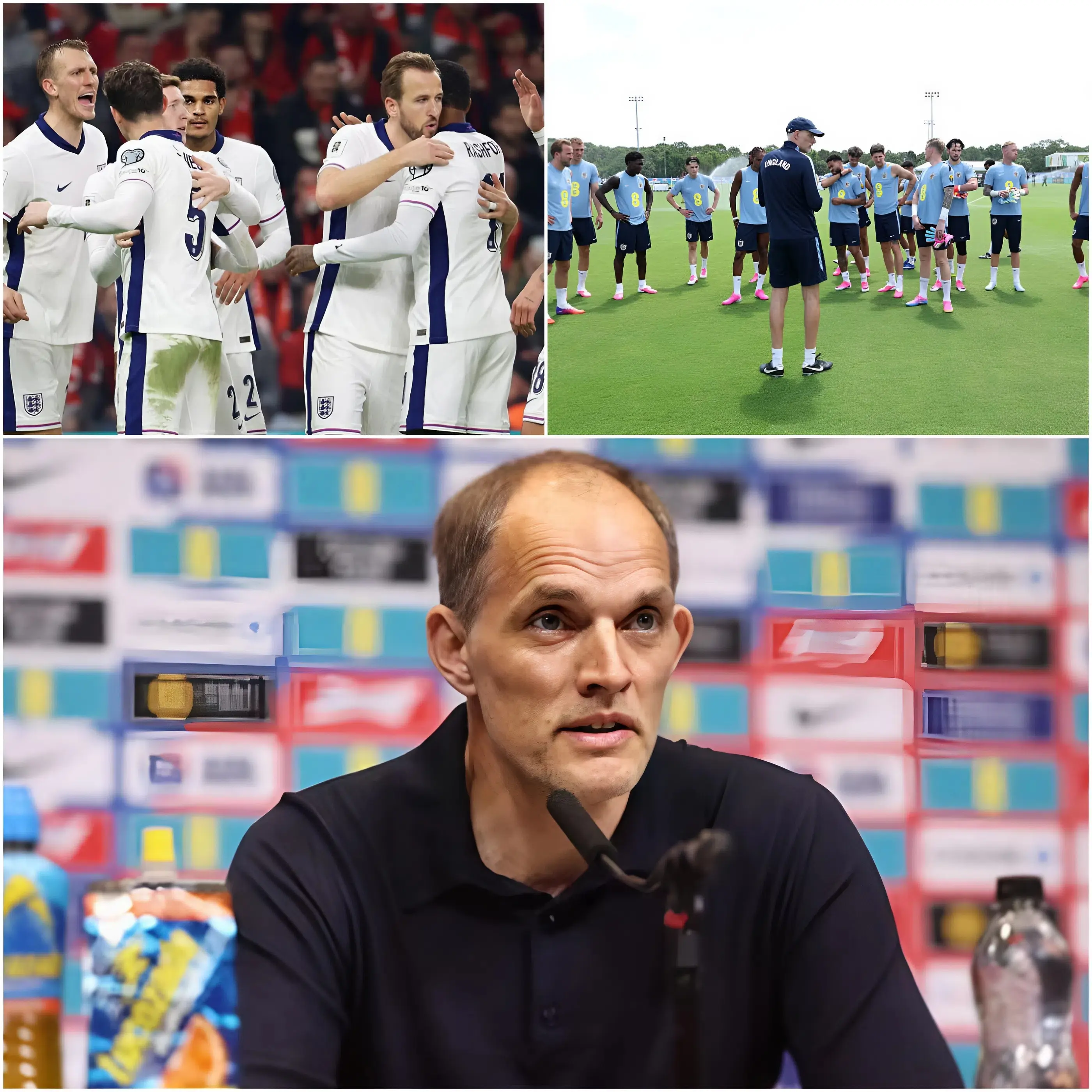
Inside the England setup, the reaction to this development has been described as focused and professional. Players are reportedly aware of the increased importance placed on securing a place within this core group, which is expected to influence selection decisions in upcoming matches. The friendly against New Zealand will therefore serve as both a tactical test and a performance evaluation opportunity for those involved.
The “hidden detail” within Tuchel’s plan is believed to be its psychological impact on squad competition. By clearly identifying a core group, the coaching staff may be creating a more defined hierarchy within the squad, encouraging players outside the selection to elevate their performances in order to break into the main structure. This competitive environment is seen as a potential driver of overall team improvement.
Supporters have reacted with a mixture of excitement and concern. Some view the establishment of a core group as a necessary step toward building a cohesive team capable of competing at the highest level. Others worry that limiting flexibility too early in the cycle could restrict tactical experimentation and reduce opportunities for emerging players to break into the squad.
Analysts have noted that Tuchel’s approach reflects a managerial philosophy centered on clarity and control. Throughout his career, he has often emphasized structured systems and defined roles within his teams. Applying this philosophy to the England national team suggests a desire to eliminate ambiguity and establish a clear identity ahead of the World Cup.
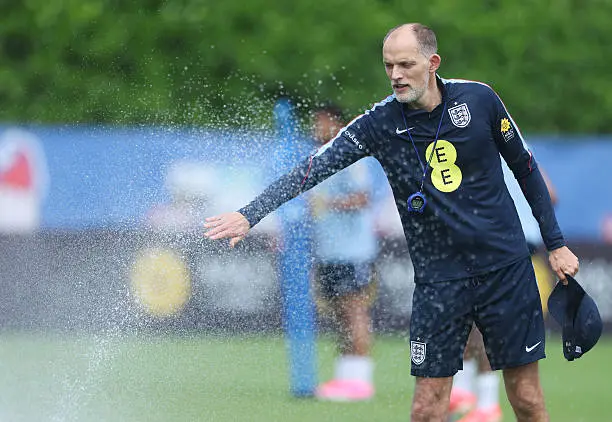
The upcoming friendly against New Zealand is expected to provide the first real insight into how this 11-player structure functions in practice. Coaching staff are reportedly focusing on key performance indicators such as pressing coordination, defensive compactness, and attacking transitions. These metrics will likely determine whether the core group can operate effectively as a unified unit.
Another important aspect of the strategy is long-term conditioning. By repeatedly fielding the same core players, Tuchel aims to develop instinctive understanding between them, reducing the need for constant communication during high-pressure moments. This is particularly important in tournament football, where quick decision-making often determines outcomes in knockout matches.
Within the broader football community, comparisons have already been drawn to other successful international teams that have relied on stable core groups to achieve major tournament success. Historical patterns suggest that teams with strong internal cohesion often outperform those with frequent rotation, particularly in the later stages of competitions.
However, critics caution that modern international football requires adaptability, especially when facing diverse tactical systems from different continents. They argue that over-reliance on a fixed group could limit England’s ability to respond to unexpected challenges during the tournament. This tension between stability and flexibility has become a central point of debate following Tuchel’s announcement.
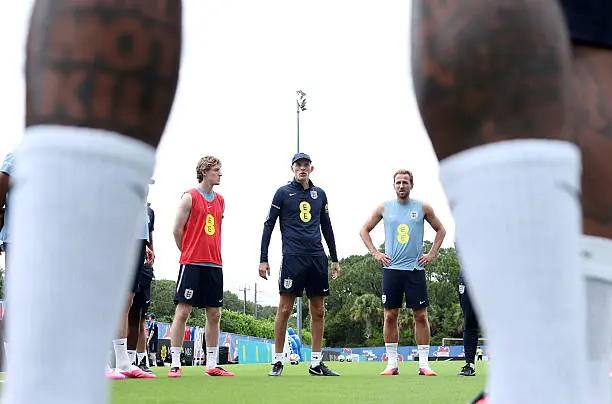
A further “behind-the-scenes” element of the plan involves data-driven selection. Sources indicate that performance analytics have played a significant role in identifying the core group, with metrics such as distance covered, positional discipline, and tactical efficiency heavily influencing decisions. This analytical approach reflects the increasingly scientific nature of modern football management.
Tuchel’s decision also places significant emphasis on leadership within the squad. The core group is expected to include players who not only perform consistently on the pitch but also contribute to maintaining team structure and communication. This leadership layer is seen as essential for managing pressure during high-stakes World Cup matches.
As preparations continue, attention will remain focused on how the selected players respond to this responsibility. The psychological demands of being part of a designated core group can be significant, as expectations increase with every performance. Maintaining consistency over an extended period will be crucial for validating Tuchel’s strategy.
Ultimately, the unveiling of the 11-player core plan represents a defining moment in England’s 2026 World Cup preparation. It signals a clear intent to build a structured, cohesive, and highly disciplined team capable of competing at the highest level. Whether this approach leads to success will depend on execution, adaptability, and the ability of the selected group to perform under the intense pressure of international football’s biggest stage.