
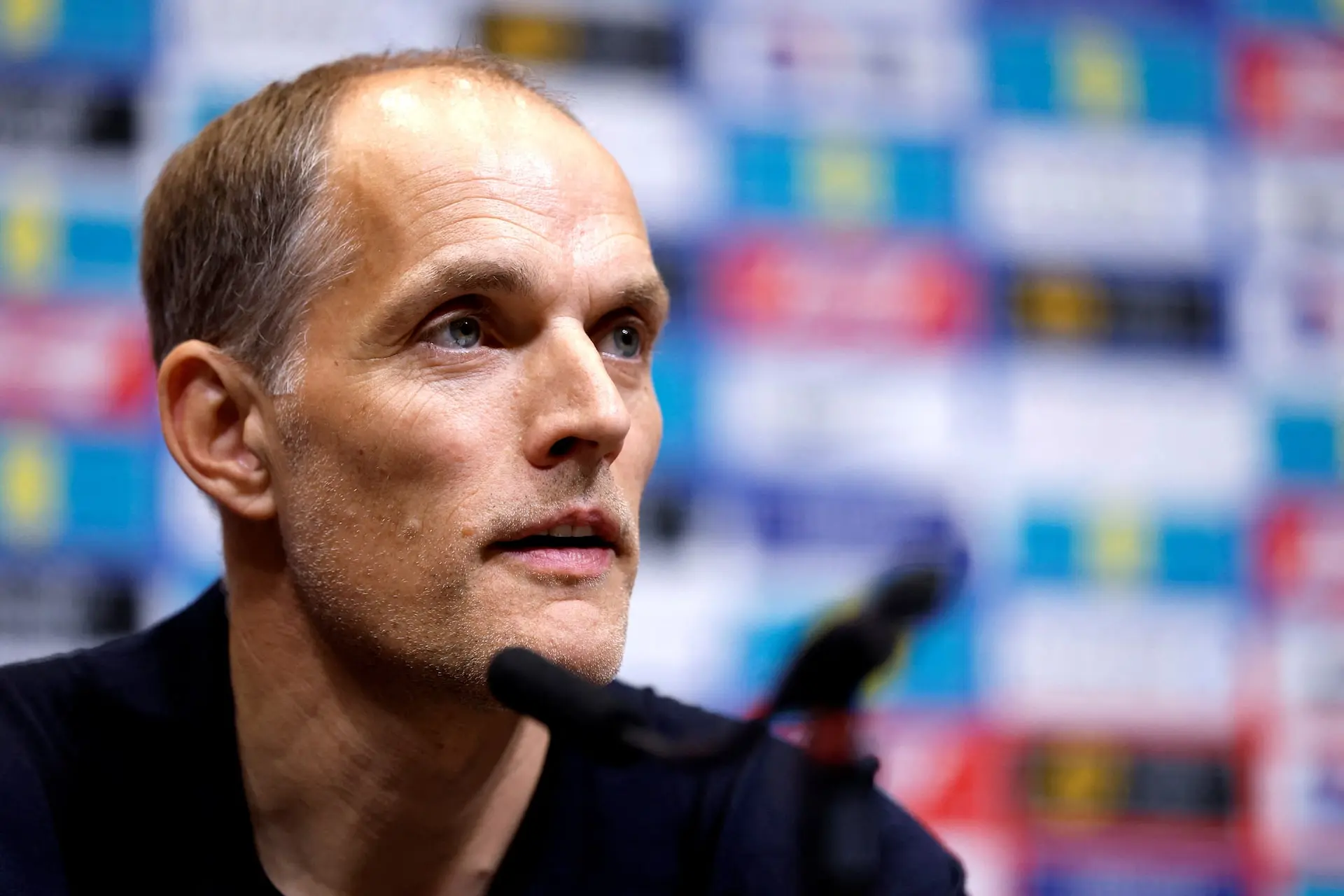
England national team head coach Thomas Tuchel has sent shockwaves through the football world after delivering one of the most high-pressure statements of his international managerial career. Speaking in a tense press conference ahead of the 2026 FIFA World Cup cycle, Tuchel reportedly declared that failure to win the tournament would lead him to resign, instantly turning England’s long-term ambitions into an all-or-nothing mission.
The message, delivered with what witnesses described as a firm tone and unwavering eye contact, has dramatically increased scrutiny on the national team. According to journalists present, the atmosphere inside the press room shifted immediately as Tuchel outlined the scale of responsibility he associates with managing England. His remarks were interpreted not just as a sporting ambition, but as a personal commitment tied to national expectation and historical pressure.
Tuchel reportedly stated that missing out on World Cup success would not be viewed as a simple competitive failure, but as a responsibility that weighs heavily on the dreams of millions of supporters. This framing has intensified debate among analysts, with many suggesting that the psychological burden placed on the squad is now higher than at any previous point in recent England football history.
A “hidden detail” emerging from the press conference is that Tuchel’s statement was not improvised, but part of a broader internal messaging strategy designed to sharpen focus within the squad. Sources close to the team suggest that the coaching staff has been working on building a mentality of absolute accountability, where every match is treated as a step toward a single defining objective: World Cup victory.
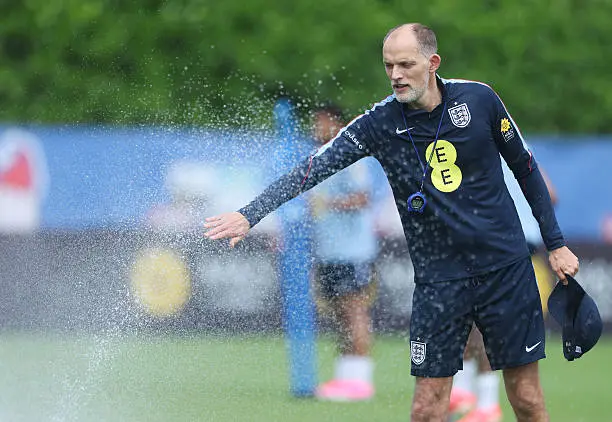
Players reportedly remained silent throughout the statement, absorbing the intensity of the message without interruption. Observers noted that the room felt unusually heavy, with the tension described as almost physical. This reaction has been interpreted as evidence that Tuchel’s leadership approach is already reshaping the psychological environment of the national team camp.
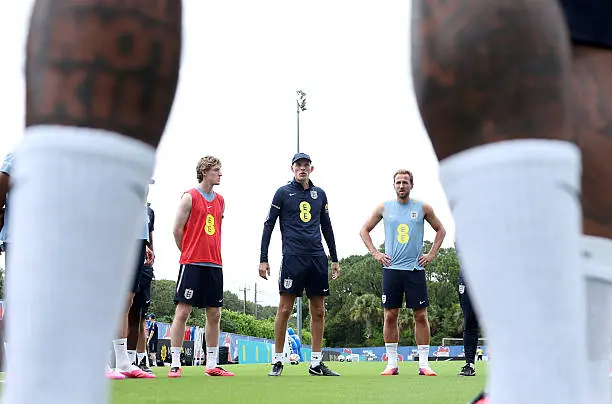
The England squad, often referred to as “The Three Lions,” now enters every fixture under heightened expectations. According to internal sources, training sessions have become more structured and detail-focused, with increased emphasis on tactical discipline, game management, and mental resilience. The coaching staff is believed to be reinforcing the idea that consistency, rather than moments of brilliance alone, will determine success in major tournaments.
Supporters watching the press conference live also reacted strongly to Tuchel’s remarks. Social media platforms were flooded with responses, ranging from admiration for his ambition to concern about the pressure being placed on players. Many fans interpreted the statement as a sign that England’s management is fully committed to ending decades of World Cup frustration.
Behind the scenes, it is understood that Tuchel has been conducting extensive evaluations of squad depth, tactical flexibility, and player adaptability. His approach reportedly focuses on identifying individuals capable of performing under extreme pressure situations, particularly in knockout-stage scenarios where margins for error are minimal.
Analysts suggest that Tuchel’s ultimatum could also serve as a psychological filter for the squad. By establishing such a high-stakes framework, the coaching staff may be aiming to determine which players can thrive under maximum pressure conditions. This approach, while controversial, has been used by elite managers in high-performance environments to build mental resilience.
The reaction within the broader football community has been divided. Some experts argue that Tuchel’s statement reflects the necessary mentality required to compete at the highest level of international football. Others caution that such declarations could increase stress levels within the squad and potentially impact performance if not managed carefully over time.
A key element of Tuchel’s message is the symbolic weight it places on the 2026 World Cup campaign. Rather than treating it as one of many tournaments, his framing elevates it to a defining moment in English football history. This shift in narrative has intensified public attention and increased the emotional investment of supporters across the country.
According to individuals familiar with England’s preparation structure, the coaching staff has already begun implementing stricter performance benchmarks. These include not only match outcomes but also training intensity, tactical adherence, and psychological readiness. The goal is to create a unified system where every detail contributes directly to World Cup preparation.
Tuchel’s leadership style has historically been associated with high standards and uncompromising expectations. His latest comments appear to extend this philosophy to the international stage, where the pressure is significantly amplified due to national expectations and global visibility. This transition has placed him at the center of one of the most closely watched managerial projects in world football.
The emotional response from fans highlights the deep connection between the national team and its supporters. England’s long-standing pursuit of World Cup success has created a cultural narrative of hope, frustration, and anticipation. Tuchel’s statement has now intensified that narrative, turning every upcoming match into a symbolic step toward redemption or disappointment.
Internally, it is believed that the squad is being encouraged to embrace pressure rather than avoid it. Coaching staff are reportedly emphasizing that elite performance is defined by the ability to remain composed in decisive moments. This philosophy aligns with Tuchel’s broader approach of converting external pressure into internal motivation.
As preparations continue, attention will increasingly focus on how the team responds to this heightened environment. Performance in upcoming fixtures will be closely analyzed not only for tactical execution but also for psychological stability. Every match is now seen as part of a larger journey toward the 2026 World Cup.
Ultimately, Tuchel’s declaration has transformed England’s campaign narrative into one of extreme accountability and ambition. Whether this approach leads to success or adds further pressure will depend on how effectively the squad adapts to the expectations now placed upon them. What is certain is that the road to 2026 has already become one of the most intense chapters in modern England football history.