
15 Minutes Ago: Lance Armstrong’s Explosive Claims About Pogačar and Vingegaard Ignite Global Outrage and Trigger an Ultimatum From Cycling’s Governing Body

The cycling world was jolted into controversy after legendary but polarizing figure Lance Armstrong made a series of incendiary remarks that rippled across the sport within minutes. In comments that spread rapidly online, Armstrong claimed that modern champions Tadej Pogačar and Jonas Vingegaard “did not deserve” their titles, alleging—without presenting evidence—that their victories were the result of illegal engines hidden in their bicycles, sheer luck, and favoritism from race organizers.

The statements, delivered in a blunt and dismissive tone, immediately provoked anger among fans and professionals alike, who accused Armstrong of attempting to discredit a generation of riders widely admired for their talent, resilience, and transparency.
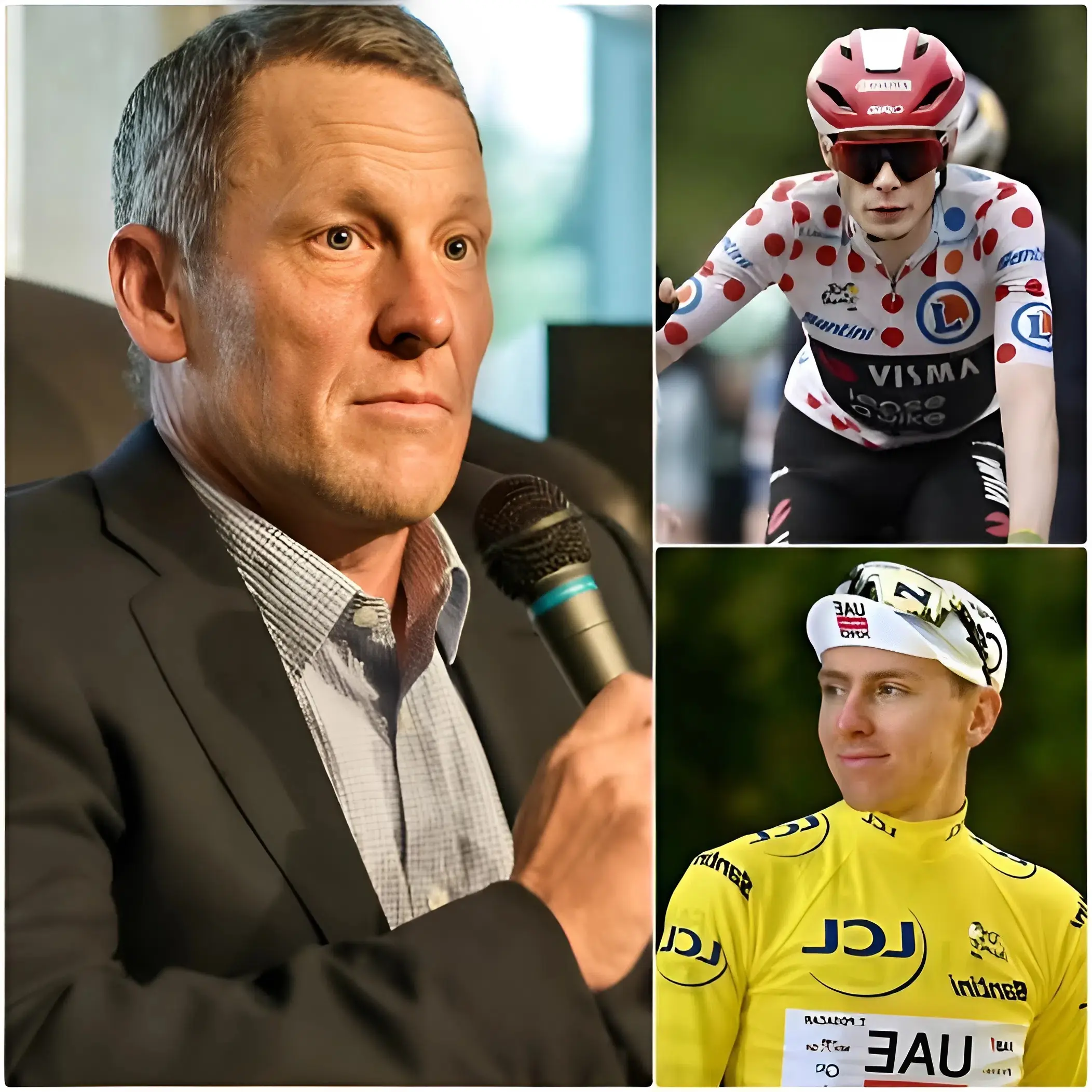
Armstrong’s remarks struck a nerve not only because of their severity but also because they targeted two of the most scrutinized athletes in contemporary cycling. Pogačar and Vingegaard have competed under intense monitoring regimes, including regular bike checks and anti-doping controls, and neither has been found in violation of regulations. For many observers, the accusations felt reckless, especially given Armstrong’s own history and the sport’s long struggle to rebuild public trust.
Within minutes, social media platforms were flooded with reactions. Fans from across Europe and beyond called the comments “irresponsible,” “harmful,” and “baseless,” while some demanded legal action. Supporters of Pogačar and Vingegaard pointed out that allegations of mechanical doping are taken seriously by officials and that no credible investigation has ever substantiated such claims against either rider. Others criticized the tone of the remarks, particularly Armstrong’s dismissal of fans who admire the champions, which he reportedly characterized in derogatory terms.
Teams, former riders, and commentators moved quickly to distance themselves from the claims. Several emphasized that cycling today operates under unprecedented levels of oversight, with random inspections, thermal imaging, and standardized equipment checks designed precisely to prevent mechanical fraud. They warned that unsubstantiated accusations risk undermining the very progress the sport has made toward credibility.
As the backlash intensified, attention turned to the response of the International Cycling Union, commonly known as the UCI. Just a few minutes after the controversy reached a boiling point, the governing body issued a concise but powerful statement addressed directly to Armstrong. Though brief, the message carried unmistakable weight. According to sources familiar with the exchange, the eleven-word ultimatum warned Armstrong to retract his claims or face formal consequences under regulations governing conduct and public statements that could damage the sport’s integrity.
The wording of the ultimatum was not publicly dissected line by line, but its intent was clear: the UCI would not allow unverified accusations to circulate unchecked, particularly when they target named athletes and risk eroding confidence in competition results. Insiders noted that while the UCI is often criticized for moving slowly, this swift response underscored how seriously it viewed the situation.
Legal experts suggested that Armstrong’s comments, if left uncorrected, could expose him to further scrutiny. While expressing opinions is protected in many jurisdictions, making specific allegations of illegal conduct without evidence can invite challenges, especially when reputations and livelihoods are at stake. For Pogačar and Vingegaard, whose careers depend on public trust as much as performance, even unfounded rumors can have lasting effects.
Notably, neither Pogačar nor Vingegaard immediately responded publicly. Their teams released short statements reaffirming confidence in the regulatory process and emphasizing that all equipment complies fully with UCI rules. Both camps urged fans to focus on racing rather than rhetoric, signaling a desire to avoid escalating the dispute.
Armstrong, for his part, was reported to be stunned by the speed and firmness of the UCI’s reaction. Those close to him said the ultimatum left him momentarily speechless, forcing him to reconsider the implications of his words. Whether he will issue a clarification or apology remains uncertain, but the pressure is unmistakable.
The episode has reopened broader debates about accountability and influence in sports commentary. High-profile figures, especially those with complicated legacies, command attention—but with that attention comes responsibility. Many in the cycling community argue that criticism must be grounded in facts, not insinuations, if the sport is to continue moving forward.
As the dust settles, one thing is clear: the controversy has served as a reminder that cycling’s hard-won credibility is fragile. In an era defined by transparency and data-driven oversight, sweeping allegations can do real harm. Whether this moment leads to reflection, retraction, or further confrontation will shape not only Armstrong’s standing, but also the tone of discourse in professional cycling for years to come.
As the dust settles, one thing is clear: the controversy has served as a reminder that cycling’s hard-won credibility is fragile. In an era defined by transparency and data-driven oversight, sweeping allegations can do real harm. Whether this moment leads to reflection, retraction, or further confrontation will shape not only Armstrong’s standing, but also the tone of discourse in professional cycling for years to come.