
Tensions inside Australia’s Senate surged this week after a heated exchange over constitutional eligibility reignited debate about transparency, standards, and political accountability. What began as a procedural inquiry rapidly escalated into one of the most confrontational moments of the sitting period, as Senator Pauline Hanson pressed questions regarding citizenship compliance under Section 44 of the Australian Constitution—an issue that has derailed political careers in the past.
Section 44, which disqualifies dual citizens and certain other officeholders from sitting in Parliament, has been a recurring flashpoint in Australian politics. The 2017–2018 “citizenship crisis” saw multiple members of Parliament ruled ineligible by the High Court, triggering resignations, by-elections, and intense public scrutiny. Since then, eligibility documentation and disclosure standards have carried heightened political sensitivity. Against that backdrop, Hanson’s call for renewed transparency immediately resonated beyond the chamber.

During Senate proceedings, Hanson questioned whether all relevant documentation regarding a fellow senator’s citizenship status had been formally tabled and verified. She cited correspondence, referenced procedural obligations, and urged referral of the matter to a committee for examination. Her remarks were delivered in a firm and unyielding tone, emphasizing what she described as the need for uniform legal standards. “Every member must meet the same constitutional requirements,” she stated, framing her argument around equality before the law rather than personal critique.
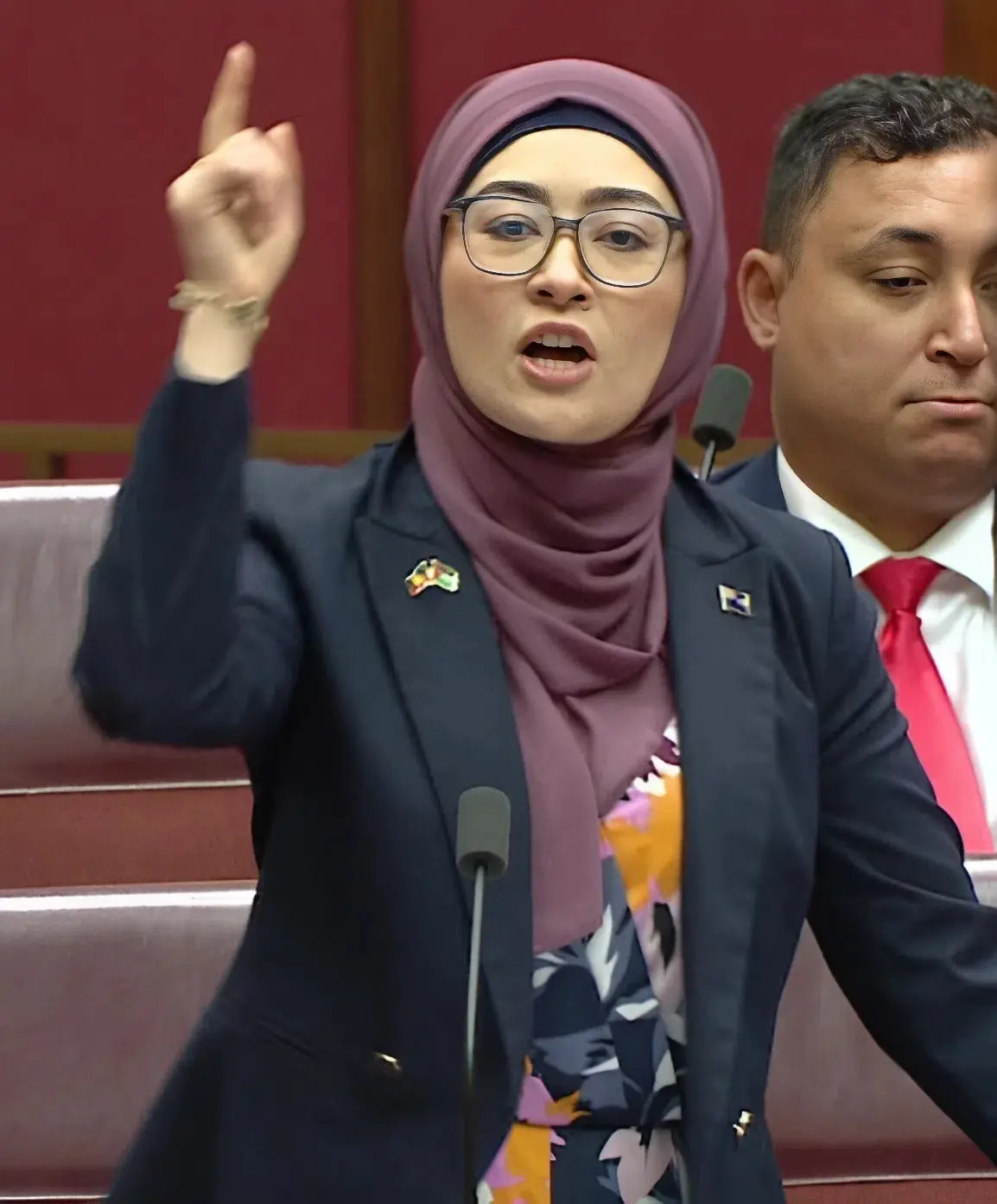
Greens senators responded swiftly, objecting to what they characterized as insinuation without substantiated evidence. They argued that eligibility declarations had already been provided in accordance with established processes and accused Hanson of politicizing constitutional safeguards. Points of order were raised repeatedly as interjections grew louder, prompting the presiding officer to call for calm and remind senators of parliamentary decorum.
Observers described the chamber atmosphere as unusually charged. While parliamentary clashes are routine, disputes invoking constitutional compliance carry particular weight due to their legal implications. The Chair intervened multiple times, requesting that statements avoid imputations of improper conduct unless supported by formal motion. Procedural language replaced rhetorical flourish as senators debated whether a committee referral was warranted.
The confrontation unfolded against the memory of the High Court’s strict interpretation of Section 44. In previous rulings, the Court made clear that ignorance of foreign citizenship status does not exempt a candidate from disqualification. That precedent continues to shape how parties vet nominees and how opponents scrutinize disclosures. Legal scholars note that even minor administrative ambiguities can attract outsized political attention because the stakes involve parliamentary legitimacy itself.
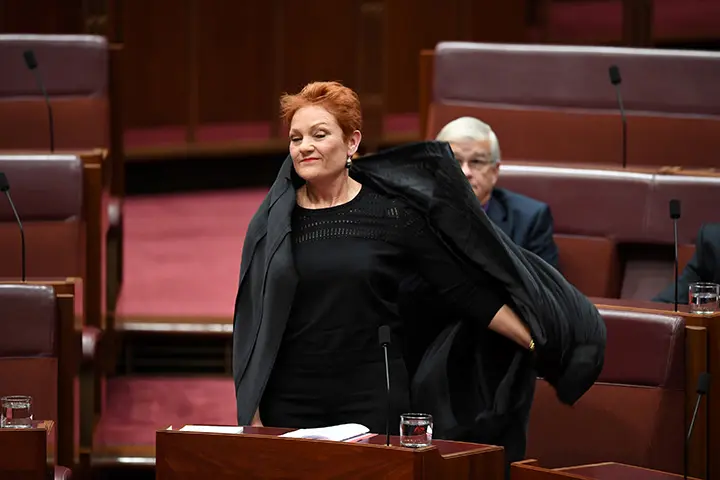
Hanson’s insistence on immediate tabling of documents intensified the exchange. She argued that transparency protects not only voters but also the integrity of the institution. Critics countered that raising eligibility questions without new evidence risks amplifying suspicion unnecessarily. The Greens emphasized that their internal compliance procedures mirror those adopted across Parliament following the earlier constitutional crisis.
Outside the chamber, reactions divided sharply. Supporters of Hanson praised what they saw as steadfast adherence to constitutional accountability, asserting that no senator should be exempt from scrutiny. Others warned that repeated public challenges without formal legal basis could erode trust rather than reinforce it. Political analysts cautioned that procedural oversight must remain distinct from political theater.
Professor Daniel Whitcombe, a constitutional law expert, observed that Section 44 remains one of the most technically demanding eligibility provisions among Westminster-derived systems. “The High Court has taken a literal approach,” he explained. “Parliamentarians are understandably cautious because errors—even inadvertent ones—can have severe consequences.” He added that transparency mechanisms implemented after 2018 have significantly reduced ambiguity, though they have not eliminated political dispute.
As debate intensified, calls for a formal committee referral became the focal point. Committee processes allow evidence gathering and structured review, reducing reliance on floor debate. However, initiating such referral typically requires cross-party agreement or majority support, both of which depend on political calculation. The procedural maneuvering underscored how constitutional interpretation intersects with partisan dynamics.
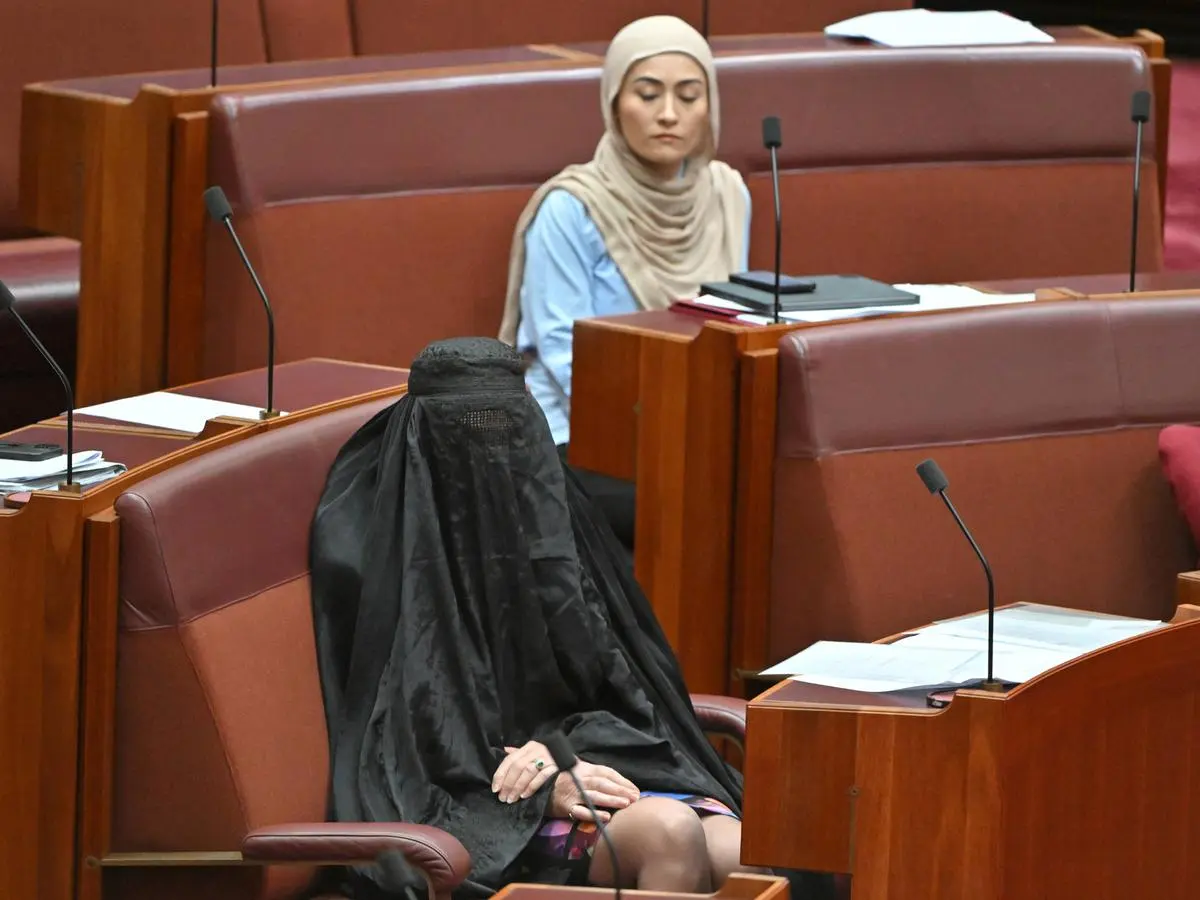
The presiding officer ultimately restored order sufficiently for scheduled legislative business to continue, though the earlier confrontation lingered in corridor conversations and media coverage. No immediate referral was approved during that sitting, and no judicial proceedings were initiated. Nonetheless, the exchange reignited public awareness of constitutional compliance as a live political issue rather than a historical episode.
Commentators noted that disputes over eligibility reflect deeper tensions about trust and institutional credibility. When citizens perceive inconsistency in enforcement, skepticism grows. Conversely, repeated allegations without judicial confirmation can create fatigue and cynicism. Balancing vigilance with restraint remains a delicate task for democratic institutions.
The broader political environment amplifies such confrontations. Economic pressures, shifting voter allegiances, and fragmented party loyalties heighten the stakes of parliamentary exchanges. In that climate, even procedural disputes can be framed as existential struggles over fairness and transparency. Yet Australia’s constitutional framework channels ultimate resolution to the High Court, not to rhetorical victory within the chamber.
For now, the episode stands as a reminder of how constitutional provisions drafted more than a century ago continue to shape contemporary politics. Section 44’s strict language leaves little room for interpretive flexibility, and its enforcement history ensures that any question—however technical—can command national attention.
Whether the matter evolves into formal review or dissipates amid other legislative priorities remains uncertain. What is clear is that parliamentary scrutiny, when grounded in constitutional text, carries enduring significance. The Senate’s heated exchange underscored both the resilience and fragility of democratic process: resilient because disputes are aired openly under procedural rules; fragile because perception can outpace verification.
In Australia’s political arena, accountability debates rarely conclude in a single sitting. They unfold through documentation, committee processes, and, when necessary, judicial clarification. This latest confrontation may ultimately prove less explosive than its dramatic presentation suggests. Yet it has once again illuminated the enduring tension between political rivalry and constitutional precision—an equilibrium central to the integrity of parliamentary democracy.