
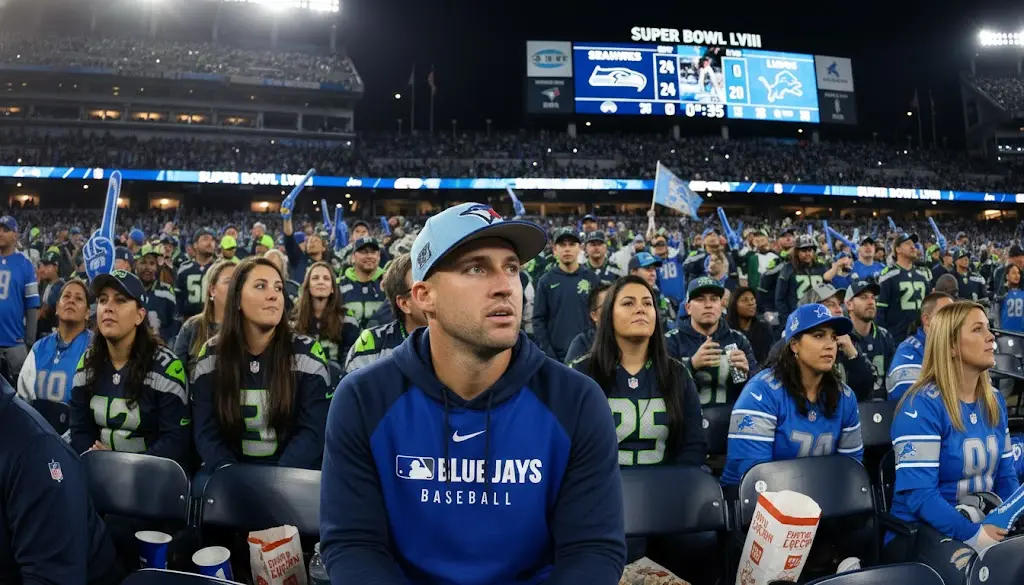
George Springer did not expect his night at Levi’s Stadium to turn into one of the most controversial public statements of his career. The Toronto Blue Jays star attended the Super Bowl as a fan, drawn by the spectacle, the atmosphere, and the promise of witnessing one of the biggest sporting events in the world. Instead, he walked away frustrated, embarrassed, and openly angry, later sharing a scathing assessment of what he had just witnessed.
According to Springer, the Super Bowl victory by the Seattle Seahawks was not only disappointing but deeply troubling, shaped by officiating decisions he believes fundamentally altered the outcome of the game.
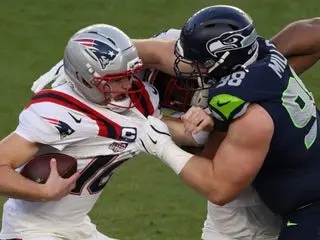
Springer’s reaction was striking not just because of its intensity, but because of who he is. As an MLB star accustomed to pressure, scrutiny, and high-stakes moments, he is no stranger to controversial calls or painful losses. Yet he described this experience as different, something that crossed a line from normal sporting disappointment into what he called a “shameful” display. Sitting in the stands at Levi’s Stadium, surrounded by tens of thousands of fans and millions more watching worldwide, Springer felt that the integrity of the game was compromised.

What angered him most, he explained, was the pattern he perceived throughout the match. In his view, questionable calls consistently favored Seattle at crucial moments, creating momentum swings that New England struggled to overcome. Springer emphasized that no single decision determines a Super Bowl, but he argued that a series of pivotal rulings can slowly tilt the balance, draining one team’s confidence while energizing the other. For him, that is exactly what unfolded on the field.
The first incident Springer highlighted occurred early in the game, when New England appeared to force a critical third-down stop. According to his account, a defensive play that should have ended Seattle’s drive instead resulted in a penalty that extended possession. From the stands, Springer said the call felt soft and unnecessary, especially given the physical tone set by the officials earlier in the game. That extension, he believes, allowed Seattle to build early momentum and settle into their rhythm.
The second moment that left him stunned came in the second half, during what Springer described as a clear missed holding call on a key Seattle offensive play. New England’s pass rush had finally begun to disrupt the Seahawks’ quarterback, only for a long completion to unfold despite what Springer and many nearby fans believed was an obvious infraction. That play flipped field position and led directly to points. For Springer, it was emblematic of a larger issue: similar actions, he felt, were being overlooked for one team while scrutinized closely for the other.
The third and most controversial situation, in Springer’s eyes, came late in the game during a critical New England drive. Facing intense pressure and trying to mount a comeback, New England appeared to draw contact that many expected to result in a defensive penalty. Instead, the flags stayed down. The drive stalled, and the emotional shift in the stadium was immediate. Springer described a wave of disbelief sweeping through sections filled with neutral fans, not just supporters of one side. To him, that silence from the officials spoke louder than any single call.
Springer was careful to clarify that his frustration was not directed at the Seahawks as players. He acknowledged their talent, preparation, and execution, and he emphasized that Seattle did what any team would do: take advantage of opportunities presented to them. His criticism was aimed squarely at the officiating and the broader system that allows such controversies to overshadow the sport’s biggest stage. In his words, the Super Bowl should be remembered for excellence, not for arguments about fairness.
What made Springer’s comments resonate so strongly was his sense of regret. He admitted that he felt he had wasted his time attending the game, a powerful statement coming from an athlete who understands how rare and special these events are. He described the experience as emotionally draining rather than inspiring, leaving him questioning why fans invest so much passion when outcomes can feel predetermined by forces beyond the players’ control.
The reaction to Springer’s remarks was immediate and polarized. Some fans applauded his honesty, praising him for saying what many were thinking but hesitant to voice publicly. They argued that it takes courage for an athlete from another sport to criticize the NFL so openly, especially given the league’s immense influence. Others accused him of overreacting, suggesting that every Super Bowl features controversial moments and that focusing on officiating diminishes the achievements of the winning team.
Analysts and former players weighed in as well, offering more nuanced perspectives. Some acknowledged that the NFL’s officiating has been under intense scrutiny for years, particularly in high-profile games where every decision is magnified. They pointed out that the league has introduced rule changes, replay reviews, and additional oversight precisely because of these ongoing concerns. At the same time, they cautioned against drawing definitive conclusions based on emotional reactions immediately after a game.
Springer’s comments also reignited the broader debate about transparency and accountability in professional sports. Fans increasingly demand clearer explanations for controversial calls and more consistent standards across games. In baseball, Springer himself has experienced similar debates over umpiring and replay decisions, giving his criticism an added layer of credibility. He knows firsthand how a single call can change the trajectory of a season, let alone a championship game.
From a cultural perspective, the incident highlights how interconnected modern sports fandom has become. An MLB star attending an NFL game, sharing his reaction instantly with a global audience, blurs the lines between leagues and fan bases. Springer’s voice carried weight not because he is an NFL insider, but because he is a respected competitor who understands elite performance and fairness at the highest level.
Whether one agrees with Springer or not, his remarks underscore a persistent tension in sports: the struggle to balance human judgment with the demand for absolute fairness. Officiating will always involve interpretation, but on the biggest stage of all, the margin for error feels unforgivably small. For Springer, the Super Bowl he witnessed failed that test, leaving him with disappointment instead of awe.

In the end, his reaction was less about Seattle’s victory and more about a feeling of lost trust. Trust that the game would be decided by players alone. Trust that fans could watch without second-guessing every crucial moment. Trust that the Super Bowl would represent the pinnacle of competition, not a flashpoint for controversy. That sense of betrayal is what made his words so sharp and his regret so genuine.
As the dust settles and the NFL moves forward, Springer’s comments will likely fade from headlines, replaced by offseason speculation and new storylines. But for many fans, his frustration echoes their own, serving as a reminder that the passion of sports is fragile. When fairness is questioned, even the greatest spectacle can leave a bitter aftertaste, no matter how dazzling the lights or how grand the stage.